Two-prong outlets in every room. Circuits that dim the lights when the vacuum starts. A hot tub you'd like to put on the patio and no idea whether the house can feed it. Older wiring has a way of quietly limiting what you can do with your own home, and it usually surfaces at the worst moment, either during a remodel, a home sale, or a conversation with an insurance company that suddenly has questions. Advanced Electrical Repair handles home wiring and electrical installations for homeowners in Milliken, CO, and nearby areas, whether that means one new circuit or starting over from the panel out. You'll hear what your house needs and what it doesn't, which is a distinction some outfits skip.
Advanced Electrical Repair is a veteran-owned electrical company based in Milliken, CO, serving homeowners throughout the surrounding towns. Installation and wiring work covers a wide span for us, from full rewires and aluminum wiring replacement to dedicated appliance circuits, hot tub and pool feeds, kitchen and bath remodels, room additions, new construction, and smart home systems. Houses built decades ago are where we're most at home, since the layers of modifications hiding behind the plaster in those places take experience to read correctly. Every project gets permitted and inspected, and you'll know the plan before anything opens up.
The call usually comes from someone planning a remodel who's been told the wiring has to be addressed first. Other times it's a house that keeps producing small mysteries, with outlets that don't work, a burning smell nobody can locate, or breakers that trip on a schedule only the house understands. Older homes with cloth-insulated, knob-and-tube, or aluminum branch wiring show up in this category regularly.
The cause is time and accumulation. A house built in 1955 was wired for a fraction of today's electrical load, then modified repeatedly by whoever owned it next. Insulation on old conductors dries out and cracks. Aluminum branch wiring expands and contracts at connections until it loosens and heats up. Ungrounded two-wire circuits leave nothing to protect sensitive electronics. Layer on a few decades of amateur additions, junction boxes buried behind drywall, and splices made outside of any box at all, and the system becomes something no one fully understands, including previous electricians who've worked on it.
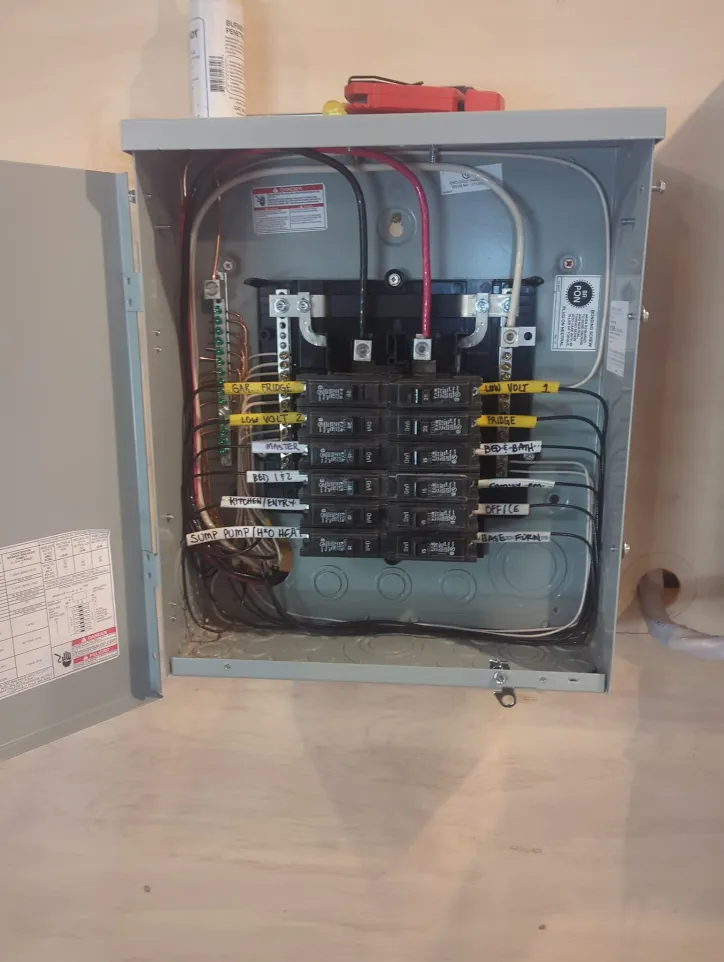
Addressing it starts with a real assessment. We open representative boxes, check the panel, identify what type of wiring is present and how much of it, and figure out how the circuits are actually laid out rather than how they should be. That tells us whether targeted repairs will do or whether whole-home rewiring makes more sense. A full rewire means running new conductors to every device, replacing boxes, grounding everything properly, updating the panel, and doing it in phases so the house stays livable. Access drives most of the cost, so basements, attics, and closets get used wherever possible to limit how much wall has to come out. Rough-in gets inspected before anything closes up, then we return for devices and final.
The result is a house you can stop working around. Grounded outlets everywhere, circuits sized for how you live, no more mystery failures, and a system a future electrician can actually follow. Homeowners going through whole-home rewires typically report that the improvement to daily life is bigger than expected, and there's a practical benefit at resale too, since buyers and insurers both ask about this now.
A complete electrical installation service under one electrical contractor keeps the pieces coordinated, and having a licensed electrician on it from the start means the permits, inspections, and code details are handled rather than hoped for. Here's an overview of the work that we do.

Aluminum branch wiring installed during the 1960s and 70s remains one of the more common safety concerns in homes of that era. Full replacement is the most thorough remedy, though approved connectors at every device offer a recognized alternative in some situations. Insurance carriers have gotten stricter about this, and we can help you understand which route fits your circumstances.
Ranges, dryers, ovens, microwaves, and window units all want a circuit to themselves, and sharing one is how nuisance tripping starts. Adding dedicated runs solves that permanently and gives each appliance the amperage it was designed to draw. Panel capacity gets verified first, so we're not solving one problem by creating another.
Adding square footage means extending the electrical system to serve it, and electrical additions get planned around the existing panel's capacity along with what the new space will demand. Our work on an electrical addition covers rough-in through trim, coordinated with your builder's schedule. New construction wiring also follows the same approach, laid out from scratch with room to grow.
Water and electricity carry their own rulebook, and both hot tub wiring and pool wiring require dedicated circuits, ground fault circuit interrupter (GFCI) protection, proper disconnect placement, and bonding of surrounding metal components. Distance from the panel to the equipment affects wire sizing, so a spa at the far end of a yard costs more to feed than one off the back door. Permitting and inspection are nonnegotiable on this work, and we handle both.
Remodeled kitchens and baths carry specific requirements that trip up a lot of projects, including multiple small-appliance circuits, GFCI protection, and dedicated runs for disposals, dishwashers, and vent fans. Sequencing matters here, since rough-in has to happen before cabinets and tile go in. Coordination with your contractor keeps everybody moving.
Not every house needs the full treatment, and partial rewiring often makes better sense when the trouble is limited to a few circuits or one floor. Targeted work like this lets homeowners spread a larger project across a few budget cycles. Having a wiring electrician assess the whole system first means the phases connect properly instead of leaving gaps.
Automated lighting, thermostats, cameras, and networked devices work far better on infrastructure built for them than on retrofitted workarounds. Smart switches generally need a neutral conductor at the box, which older wiring frequently lacks, and that gets addressed during the install. Structured cabling can go in at the same time if the walls are already open.
Strange smells, sparking outlets, and sudden power loss can signal a problem that needs attention right away. We provide electrical repairs for damaged switches, failed outlets, recurring breaker trips, and other concerns, using diagnostics to identify the cause. You can also contact us about emergency availability or schedule seasonal maintenance before winter and spring.
Adding new equipment can put more demand on an electrical system than an older panel can support. Through our electrical panel upgrades, we replace outdated panels and breakers, increase service capacity, address code concerns, and inspect related components.
A properly planned charging circuit helps your vehicle charge consistently without overloading the rest of your home. We handle electric vehicle (EV) charger installation for Level 2 units, Tesla chargers, dedicated circuits, and residential charging stations. Before installation, our team reviews panel capacity and takes care of applicable permit and code details.
Electrical choices made early can help a basement work better as a bedroom, office, bathroom, game room, or family space. We complete basement finishing electrical projects with new wiring, conveniently placed receptacles, switches, recessed fixtures, and required smoke and carbon monoxide detectors.
New fixtures can improve visibility, update the look of a room, and make outdoor areas easier to navigate after dark. Our lighting installation options include pendant and under-cabinet fixtures, chandeliers, recessed lights, ceiling fans, landscape fixtures, security lights, and motion-activated lighting.
We approach large wiring projects with careful planning, honest explanations, and the steady follow-through homeowners need when work reaches behind the walls.
Decades spent inside the walls of homes from nearly every era give us a sense for what we'll find before we open anything, and staying active in the Independent Electrical Contractors Rocky Mountain keeps our code knowledge sharp.
Rewires and large installations represent real investment, so financing through Joist is available, and we'll explain the options during your estimate.
Assessing your home and putting a number together carries no cost or obligation.
Panels, breakers, and components from Siemens, Square D, and the Cutler-Hammer BR Series go into the systems we build.
Veteran-owned and rooted right here, we build every job to a standard we'd be comfortable putting our name on, because we are.
One year of workmanship coverage protects the labor, and eligible parts and equipment come with their applicable manufacturer warranties.
A qualified electrician can inspect aluminum branch-circuit wiring and determine whether the home needs complete copper rewiring or an approved permanent repair method. The Consumer Product Safety Commission recommends professional repairs because loose or overheating aluminum connections can create fire risks.
New circuits, rewiring, additions, pools, hot tubs, and other major home wiring and electrical installations commonly involve permits and inspections. Milliken processes permits under its adopted codes, requires contractors to register, and uses the 2023 National Electrical Code for electrical work.
Warning signs can include flickering lights, warm or discolored outlets, recurring breaker trips, burning odors, sparks, and heavy reliance on extension cords. A licensed electrician can inspect the wiring, panel, connections, and grounding system to determine whether targeted repairs or whole-home rewiring makes more sense.
Large appliances and high-demand equipment often need dedicated circuits so other devices don't share the same electrical load. Electric ranges, dryers, hot tubs, pool equipment, and some kitchen or workshop appliances may require their own wiring, depending on the equipment specifications and the adopted electrical code.
Schedule the electrical work while you're planning the project, before crews pour concrete, close walls, or complete landscaping around the installation area. Early coordination gives the wiring electrician time to review panel capacity, plan cable routes, address grounding and ground fault circuit interrupter (GFCI) protection, and complete required inspections before construction covers the work.
FAQs reviewed by Ben DeVries, owner of Advanced Electrical Repair, an experienced and local electrician in Milliken, CO.
Whatever you've been putting off because of the wiring, there's usually a path forward once someone takes a proper look. Contact us for a free estimate and an honest read on what your home needs.
Business Name: Advanced Electrical Repair
Address: Milliken, CO, 80543
Phone: 720-552-7023
Business Hours:
Mon - Fri: 8:00 AM to 4:30 PM
Sat-Sun: Closed
Emergency hours available upon request.
Financing Available
We offer financing options through our estimating and invoicing software, Joist. Ask us how to apply during your free estimate.
We recommend scheduling a Spring Tune-Up in March to make sure your cooling system is ready for warmer weather, and a Winter Prep Service in November to prepare your heating system for the colder months.
Workmanship & Manufacturer Warranties
We stand behind our work with a one-year workmanship guarantee, plus all eligible parts and equipment are backed by their applicable manufacturer warranties.