The car showed up, and now you're plugging it into a regular garage outlet, watching it gain a handful of miles an hour. That works in a pinch, though it means planning your week around charging instead of just driving, and hunting down a public station when you didn't quite make it overnight gets old fast. Advanced Electrical Repair handles electric vehicle (EV) charger installation for homeowners in Milliken, CO, and the surrounding areas, from checking whether your panel can support one to mounting the unit and finishing the paperwork. You'll wake up to a full battery instead of doing math about it.
Advanced Electrical Repair is a local and licensed electrician based in Milliken, CO. Charger work has become a steady part of our schedule, covering Level 2 units, Tesla chargers, complete home charging stations, and the dedicated circuits behind them, along with panel capacity evaluations, permitting, and code compliance. Garages in older homes present their own challenges, and sorting out what's feasible in a house that was wired decades before anybody imagined charging a car in it is exactly the sort of problem we enjoy. Every installation gets permitted and inspected, so you know it was done properly.
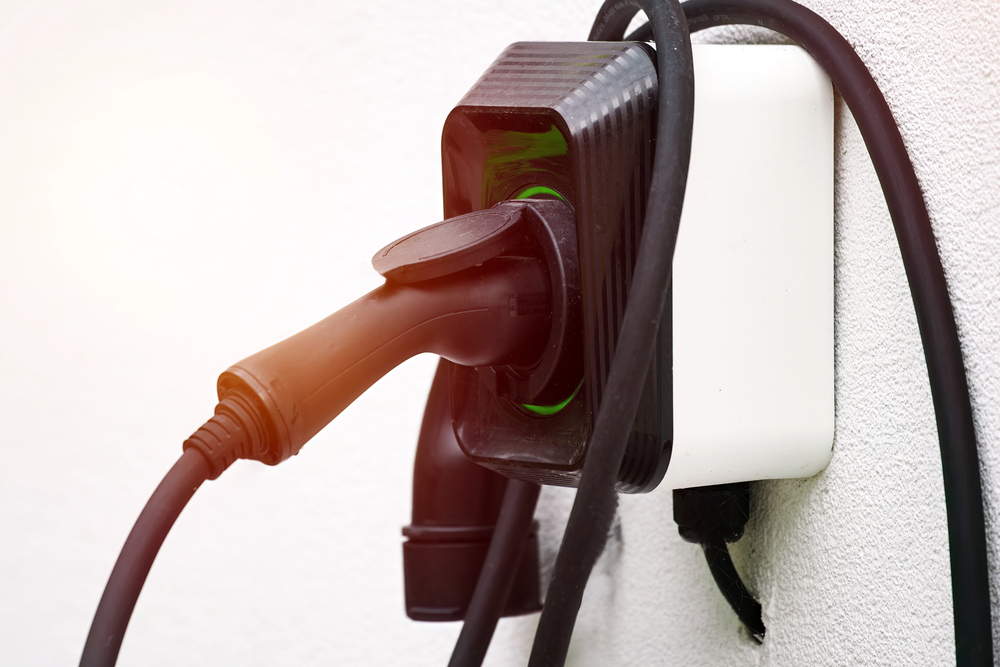
Almost every one of our EV charger calls starts the same way. Somebody bought an electric car, tried the outlet in the garage, and realized within a week that it isn't going to work. A standard 120-volt receptacle adds roughly three to five miles of range per hour, which is fine if you drive 10 miles a day and terrible if you drive 40. The charger itself is sitting in a box, and the question is what happens next.
The reason it's slow comes down to how little power that circuit was designed to deliver. Most garage outlets share a 15- or 20-amp circuit with the lights, the door opener, and whatever else got tacked on over the years. A Level 2 charger wants 240 volts and typically draws somewhere between 30 and 60 amps continuously, which is a different animal entirely. That's a dedicated circuit run straight from the panel, and it raises a second question that catches homeowners off guard: whether the panel has the capacity to give up that much in the first place.
Our process starts there. We calculate your home's existing load against what the service can supply, then determine whether the charger fits as-is or whether a panel or service upgrade needs to happen first. From there, we plan the route from panel to garage, size the wire for the distance and the draw, install the disconnect and breaker, mount the unit where the cable will actually reach your charge port, pull the permit, and stay through inspection. Wire run lengths matter more than people expect, and a detached garage or a panel on the opposite side of the house changes the scope.
What you end up with is a charger that fills your battery overnight on a circuit built to carry that load safely for years—no extension cords, no warm outlets, no rearranging your day around a public station. Homeowners tend to say the same thing afterward: they stopped thinking about charging altogether, and that's the point.
We always plan each charging project around the vehicle, the home's electrical system, and the location where the owner parks.

Before anything gets ordered or mounted, we evaluate whether your electrical service can support the additional load. This means a real load calculation rather than a glance at the panel, factoring in your existing appliances and how the home gets used. Homes that come up short have options, ranging from a service upgrade to a load management device that lets the charger back off when demand peaks.
Permitting is required for this work in the communities we serve, and skipping it creates headaches at resale and with insurance. As a licensed electrician and experienced electric vehicle charging station contractor, we pull the permit, schedule the inspection, and see it through. Utility notification gets handled too when a service change is part of the project.
Complete EV charging stations for the home go beyond a single unit, particularly for households running two EVs or planning to add a second. Layout, capacity, and load management all factor in, and there are ways to share capacity between two chargers without upgrading your entire service. Planning for the second car now costs far less than revisiting it later.
A charger needs its own circuit running directly from the panel, with nothing else sharing it. Wire size gets calculated for both the amperage and the length of the run, since voltage drop over a long distance is a real consideration in bigger homes and detached garages. Conduit, breaker, and disconnect all get selected to match the unit you bought.
Our electric vehicle charger installation work covers hardwired and plug-in units alike, with mounting height and placement planned around where your car parks and which side the port sits on. Cable management matters too, since a charging cable draped across a garage floor becomes a daily annoyance. Manufacturer specifications get followed to the letter so the warranty stays intact.
Swapping an existing unit is common enough, whether the old one failed, the technology moved on, or a new vehicle needs something different. EV charger replacement is usually straightforward when the circuit behind it is sound, though we check the wiring and breaker before reusing anything. Older installations occasionally turn up shortcuts that need correcting first.
Level 2 units and Tesla Wall Connectors make up the bulk of what we install, and both deliver a meaningful jump over a standard outlet. Tesla equipment has its own installation requirements, including specific commissioning steps, and we handle those as part of the job. Universal electrical vehicle chargers work fine for most other makes, and we're happy to talk through which style fits your situation before you buy.
A warm outlet cover, a faint burning smell, or lights that dim when the dryer kicks on are your house asking for attention. Electrical repairs like these start with finding out what's really going on behind the wall, then correcting it properly rather than patching over it, and we keep room in the schedule for emergencies.
Some older panels have a reputation in this trade, and finding one during an inspection usually means it's time. Our electrical panel upgrades cover swapping the panel and breakers, increasing service capacity, correcting code violations, and checking how everything downstream is holding up.
Sketch out a basement plan, and you'll be surprised how much electrical hides inside it. Our basement finishing electrical work means circuits for every room, outlets and switches spaced the way code calls for, recessed lighting laid out sensibly, bathroom wiring if there's one going in, and smoke and carbon monoxide detectors tied into the system.
Hanging a fixture looks easy right up until you find out the ceiling box won't hold the weight. A lighting installation done properly means the right support, the right switch, and the right fixture for the room, whether that's recessed cans, under-cabinet lights, a pendant, a chandelier, a ceiling fan, outdoor security and landscape lights, or an LED conversion.
Open walls are an opportunity you only get every so often, so it pays to think ahead while they're accessible. Home wiring and electrical installations we take on include whole-home rewires, aluminum wiring replacement, dedicated appliance circuits, hot tub and in-ground pool wiring, kitchen and bathroom remodels, additions, new construction, and smart home systems.
Well-installed EV chargers should be something you never think about again, and that's the standard we build to.
Two decades of residential and commercial work inform every load calculation we run, and staying active with the Independent Electrical Contractors Rocky Mountain keeps us current as charging requirements continue to evolve.
Charger projects that turn into panel work can get pricey, so financing through Joist is available, and we'll walk you through it during the estimate.
Coming out to look at your garage and panel costs you nothing.
Breakers and panel equipment from Siemens, Square D, and the Cutler-Hammer BR Series go into these installations, chosen for reliability under continuous load.
Running a veteran-owned local shop means we answer for our own work rather than passing you to a call center.
Our workmanship carries a one-year guarantee, and eligible parts and equipment are covered by their applicable manufacturer warranties.
An electrician can calculate your home's existing demand, inspect the service rating, and check for enough panel and circuit capacity. Empty breaker spaces alone don't confirm that the system can support EV charger installation because the charger adds a substantial electrical load for extended periods.
Milliken generally requires a permit when a project installs new electrical wiring, equipment, or circuits, which commonly applies to a Level 2 EV charger installation. A Colorado-licensed electrician can handle the electrical work, submit the required information, and prepare the installation for inspection.
Level 1 charging uses a standard 120-volt connection and works well for lighter daily driving or longer charging windows. Level 2 equipment uses a 240-volt residential supply, charges more quickly, and commonly requires a dedicated circuit installed during the EV charger installation.
A simple EV charger installation with a nearby panel and available capacity may fit within one service visit. Longer wire routes, panel limitations, permit requirements, or an electrical service upgrade can extend the process, so an on-site evaluation provides the most useful timeline.
Place the charger where its cable can reach the vehicle's charging port without stretching across a walkway or creating a tripping hazard. During an EV charger installation, an electrician should also consider the panel location, wire route, equipment rating, parking arrangement, and exposure to Colorado weather.
FAQs reviewed by Ben DeVries, owner of Advanced Electrical Repair, an experienced and local electrician in Milliken, CO.
Overnight charging in your own garage beats every alternative once you've had it. Reach out to us for a free estimate, and we'll tell you what your home needs to make it happen.
Business Name: Advanced Electrical Repair
Address: Milliken, CO, 80543
Phone: 720-552-7023
Business Hours:
Mon - Fri: 8:00 AM to 4:30 PM
Sat-Sun: Closed
Emergency hours available upon request.
Financing Available
We offer financing options through our estimating and invoicing software, Joist. Ask us how to apply during your free estimate.
We recommend scheduling a Spring Tune-Up in March to make sure your cooling system is ready for warmer weather, and a Winter Prep Service in November to prepare your heating system for the colder months.
Workmanship & Manufacturer Warranties
We stand behind our work with a one-year workmanship guarantee, plus all eligible parts and equipment are backed by their applicable manufacturer warranties.